Why is my pastry tough?
Tough pastry is almost always overworked gluten, caused by too much kneading, too much water, or repeated rerolling. Fat shortens gluten strands, so too little fat has the same effect. Handle the dough minimally, add water gradually, and rest it for at least 30 minutes before rolling.
By the chickenpie.net test kitchen · Published 24 August 2026
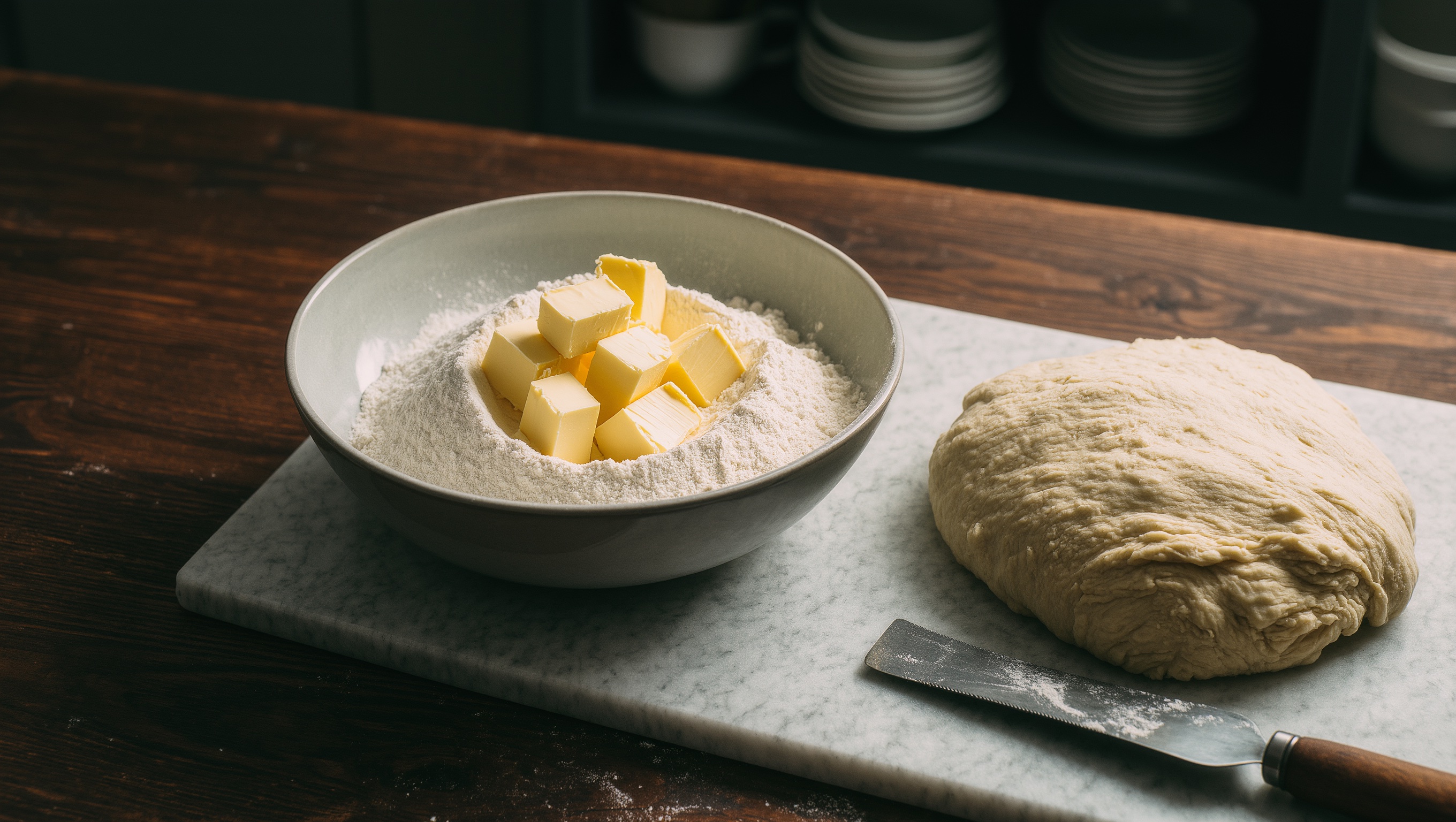
The gluten problem
Flour plus water plus agitation makes gluten, the elastic network that gives bread its chew. In bread that is the goal; in pastry it is the enemy. Every extra knead, every splash of excess water and every reroll develops more gluten, and gluten bakes up tough and hard rather than short and crumbly.
Fat is the counterweight. Rubbing butter or lard into the flour coats the proteins so they cannot link up, which is literally why shortcrust is called short. A stingy fat ratio leaves the flour free to toughen.
Where it goes wrong
Match your symptom to the cause before changing your recipe.
| Symptom | Likely cause | Fix |
|---|---|---|
| Hard and dense throughout | Too much water | Add water a spoonful at a time, stop when it just holds |
| Chewy, bready texture | Overworked dough | Mix only until it comes together, then stop |
| Tough patches, uneven | Rerolled scraps | Stack and press scraps rather than kneading them |
| Dry and hard | Too little fat | Use at least half fat to flour by weight for shortcrust |
| Tough and shrunken | No resting | Rest 30 minutes in the fridge before rolling |
Habits that keep pastry tender
Keep everything cold, including your hands off the dough as much as possible. Cold fat stays in discrete pieces instead of smearing into the flour and letting water reach the protein.
Use a light touch at every stage: rub the fat in until it resembles coarse crumbs, add ice-cold water gradually, bring the dough together with a few presses, then wrap it and rest it for a minimum of 30 minutes. A relaxed, chilled dough rolls out without a fight, and a dough that does not fight you never gets overworked.
Food processor pastry deserves its reputation for speed, but pulse rather than run the blade continuously, and stop while the mixture still looks like damp crumbs rather than a smooth ball.