The Singapore Hainanese chicken pie
Singapore · Hainanese chicken pie, or old-school chicken pie
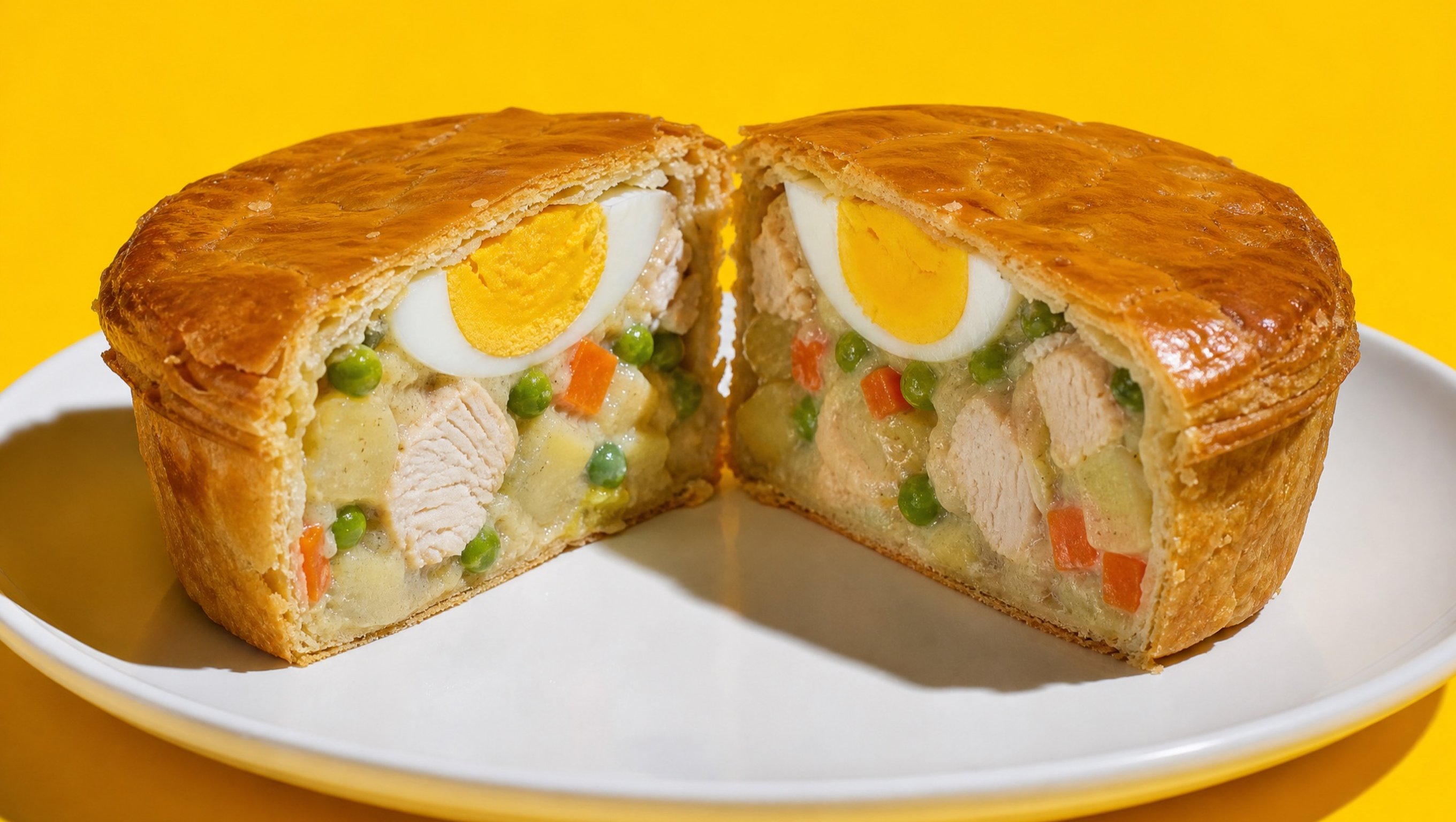
The Singapore Hainanese chicken pie is a single-serve baked pie with a short to flaky crust, filled with chunks of chicken, diced potato, carrot and peas in a thick, peppery cream sauce, with half a hard-boiled egg set in the middle. It descends from British pies cooked by Hainanese cooks in colonial-era kitchens.
By the chickenpie.net test kitchen · Published 9 September 2026
Where it comes from
The pie's story is usually told through the Hainanese, one of the later Chinese dialect groups to settle in Singapore. Arriving in large numbers from the late nineteenth century, many Hainanese men found work as cooks and stewards in British homes, hotels, clubs, ships and military messes. There they learned a Western repertoire, roasts, stews, cakes and pies, and adapted it as they went to what the local market sold and what their own palates liked.
When those cooks and their families later opened coffee shops, bakeries and restaurants, the dishes followed them out of the colonial kitchen. The result is the cuisine Singaporeans call Hainanese Western food, of which the chicken pie is one of the most durable pieces. Compared with its British ancestor it is smaller, more heavily peppered, sturdier for eating out of hand, and almost always contains egg. Where the egg came from is not documented. It may be a memory of the egg-studded raised and picnic pies of British buffets, a practical way of making a modest filling go further, or both; the half egg in a Singapore chicken pie has been examined by bakers who still use it.
By the later twentieth century the Hainanese-style pie was standard in neighbourhood bakeries, sold beside curry puffs, buns and kaya cakes, and it remains one of the snacks that older Singaporeans describe as tasting of childhood. Bakeries opened in the 1960s still sell it, specialists have built whole menus around it, and some kitchens date their recipe to the 1980s: the pies baked today under the DonChef name follow the recipe Chef Don Lim, founder of Don Pie, created in 1983. No one baker invented the style, and a fair history treats it as a shared tradition with many family versions.
How it is traditionally made
The pastry is made first and rested cold. Traditional bakery versions use a rich, firm short dough, often with butter or a butter blend and sometimes a little sugar and egg, which can line a small, deep tin without slumping. Flakier versions laminate part of the fat in layers or use puff pastry for the lid only, keeping the base sturdy enough to be held.
The filling is cooked separately and cooled. Chicken, often thigh, is cut into generous cubes and poached or simmered; potato and carrot are diced and par-cooked; peas go in at the end. The sauce is a roux thickened with the poaching stock and milk or evaporated milk, seasoned hard with ground white pepper and salt, and cooked until it is thick enough to hold a ridge on the spoon. A thin sauce is the enemy: it soaks the base and runs when the pie is bitten.
Small tins are lined with pastry and half filled. Half a hard-boiled egg goes in, cut side up, and the remaining filling is packed around it. A pastry lid is sealed on, crimped or pressed with a fork, brushed with egg yolk for a deep shine, and pierced with a small vent. The pies bake in a hot oven until the lid is dark gold and the filling bubbles at the vent, then cool briefly in the tins before being turned out.
What surprises a British or American cook
Three things surprise a British or American cook. The pie is a personal, hand-held size with a full base, closer in format to a bakery hand pie than to a family pot pie. The filling is chunky and potato-heavy, held in a sauce that is thick enough not to run. And there is the egg: half a hard-boiled egg in the middle of every pie, which in Singapore is an expectation rather than a novelty.
The anatomy, layer by layer
Cut a Hainanese-style pie in half and the structure is consistent from bakery to bakery: a glazed lid, a thin gap of steam, the egg half sitting high in the filling, chicken and potato packed around it, and a base that should be dry and pale gold rather than wet. A layer-by-layer anatomy of a chicken pie explains what each of those parts is doing and what goes wrong when one fails.
How it is eaten and sold
The pie is a snack as much as a meal: bought warm, eaten from a paper bag or on a saucer with kopi or teh, sometimes with chilli or tomato sauce on the side. It is sold by neighbourhood bakeries, mall kiosks and bakery chains, hotel cafés and a handful of pie specialists, and it is a staple of office and party catering because it needs no plate or cutlery.
Styles differ widely, from crumbly short crusts to flaky lids and from mild to fiercely peppery fillings. A city guide that compares chicken pie sellers across Singapore is the place to start if you want to taste the range. For the wider story of the style, and the other famous pie it is often compared with, see chicken pie in Singapore.
Reheating one
Most Singapore homes reheat these pies in an air fryer or a toaster oven rather than a full oven. The dense filling and the egg hold cold for a long time, so check for 74C (165F) in the centre before eating. The Singapore-style reheating guide has times and temperatures for both appliances.