Pâté chaud: Vietnam's hot pastry
Vietnam · Bánh patê sô (pâté chaud)
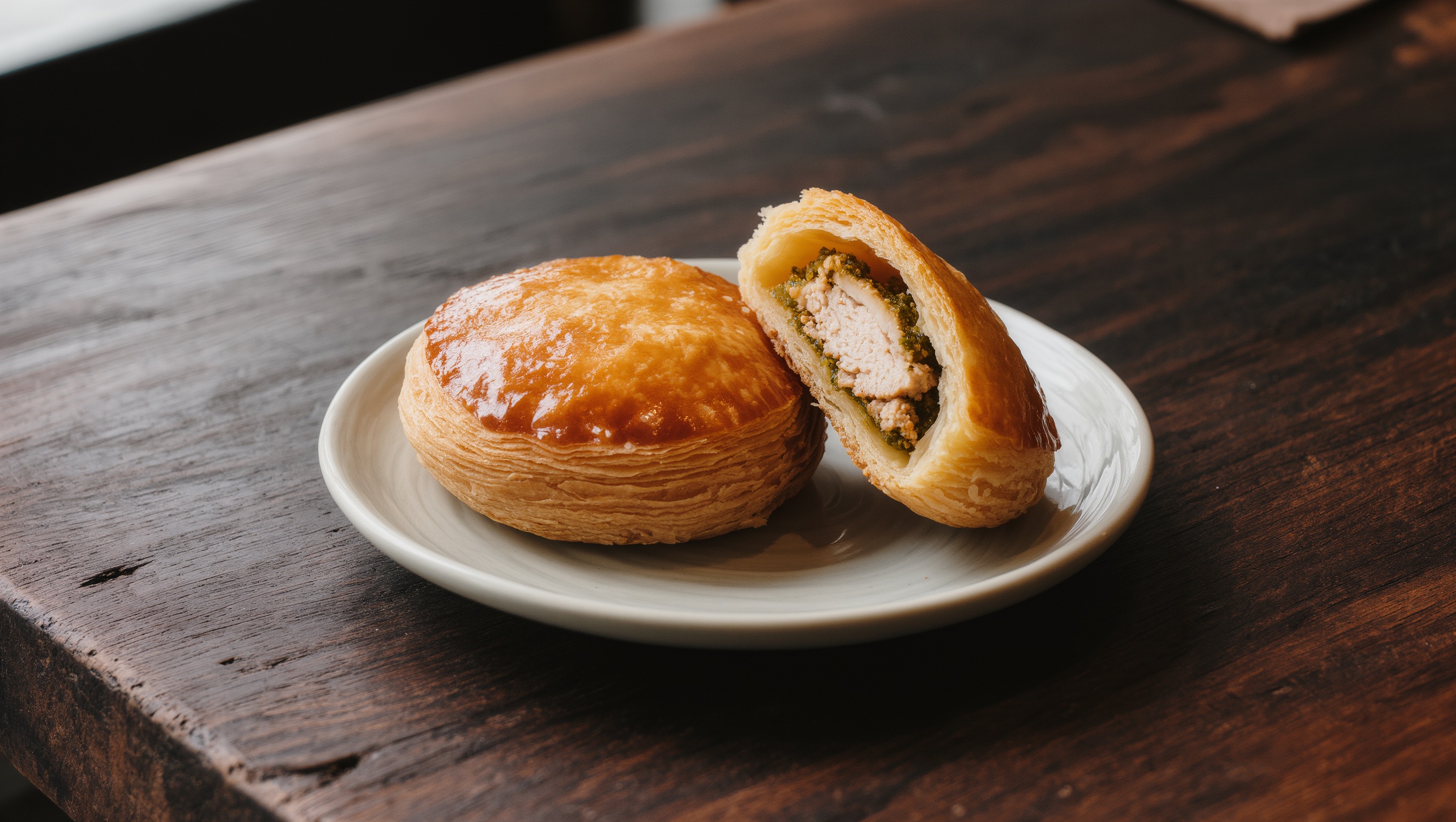
Bánh patê sô, from the French pâté chaud meaning hot pâté, is a Vietnamese puff pastry pie filled with seasoned ground meat, traditionally pork and now very commonly chicken. Round or square, glazed and flaky, it is a bakery and breakfast staple in Vietnam and in Vietnamese communities abroad.
By the chickenpie.net test kitchen · Published 16 July 2026
Where it comes from
The pastry is a legacy of French colonial rule in Vietnam, when French baking, bread, and charcuterie techniques entered local food culture. Vietnamese bakers adapted the idea of a hot meat-filled puff pastry to local tastes and ingredients, and the French name stuck in transliterated form as patê sô. The precise date of its emergence is not documented, but it is generally treated as a colonial-era adoption that matured through the twentieth century.
In Vietnam the pastry became everyday bakery food, sold alongside bánh mì and sweet buns, eaten for breakfast or as a snack with coffee. It is associated with city bakeries, school canteens, and street vendors rather than home ovens, since few traditional Vietnamese kitchens had ovens. Its closest siblings are the other French-derived items of the Vietnamese bakery, from baguettes to choux pastries, all naturalized over generations.
The Vietnamese diaspora carried bánh patê sô abroad after 1975, and it is now standard in Vietnamese bakeries in the United States, Australia, France, and Canada. Chicken fillings are widespread there, and frozen versions are sold in Asian groceries.
How it is traditionally made
The shell is French-style puff pastry, laminated so it bakes into many crisp layers. Bakeries typically cut two rounds or squares, one for the base and one for the lid, sealing the filling between them and brushing the top with egg for a glossy, deep-brown finish. A few holes or a small vent keep the lid from ballooning.
The filling is a seasoned forcemeat rather than chunks in sauce: ground chicken or pork mixed with onion or shallot, garlic, black pepper, fish sauce, and often wood ear mushroom or glass noodles in some family versions. Some recipes include a little liver pâté, nodding to the name. The mixture is placed raw or lightly cooked into the pastry and bakes into a firm, juicy patty.
The pastries are baked until puffed and flaky and are best eaten warm, when the name hot pâté makes literal sense. They are handheld, single-serving, and commonly reheated through the day in bakery warmers. Many families buy them by the box for gatherings, and they are a common treat for children after school.
What surprises a British or American cook
The filling is the key difference for a British or American cook: a peppery, fish-sauce-seasoned meatball-like forcemeat, not shredded chicken in gravy. The pastry is true laminated puff on both top and bottom, the size is a single handheld portion, and the context is breakfast or snacking with coffee rather than dinner.