Pastel de frango: Brazil's crackling chicken pastry
Brazil · Pastel de frango
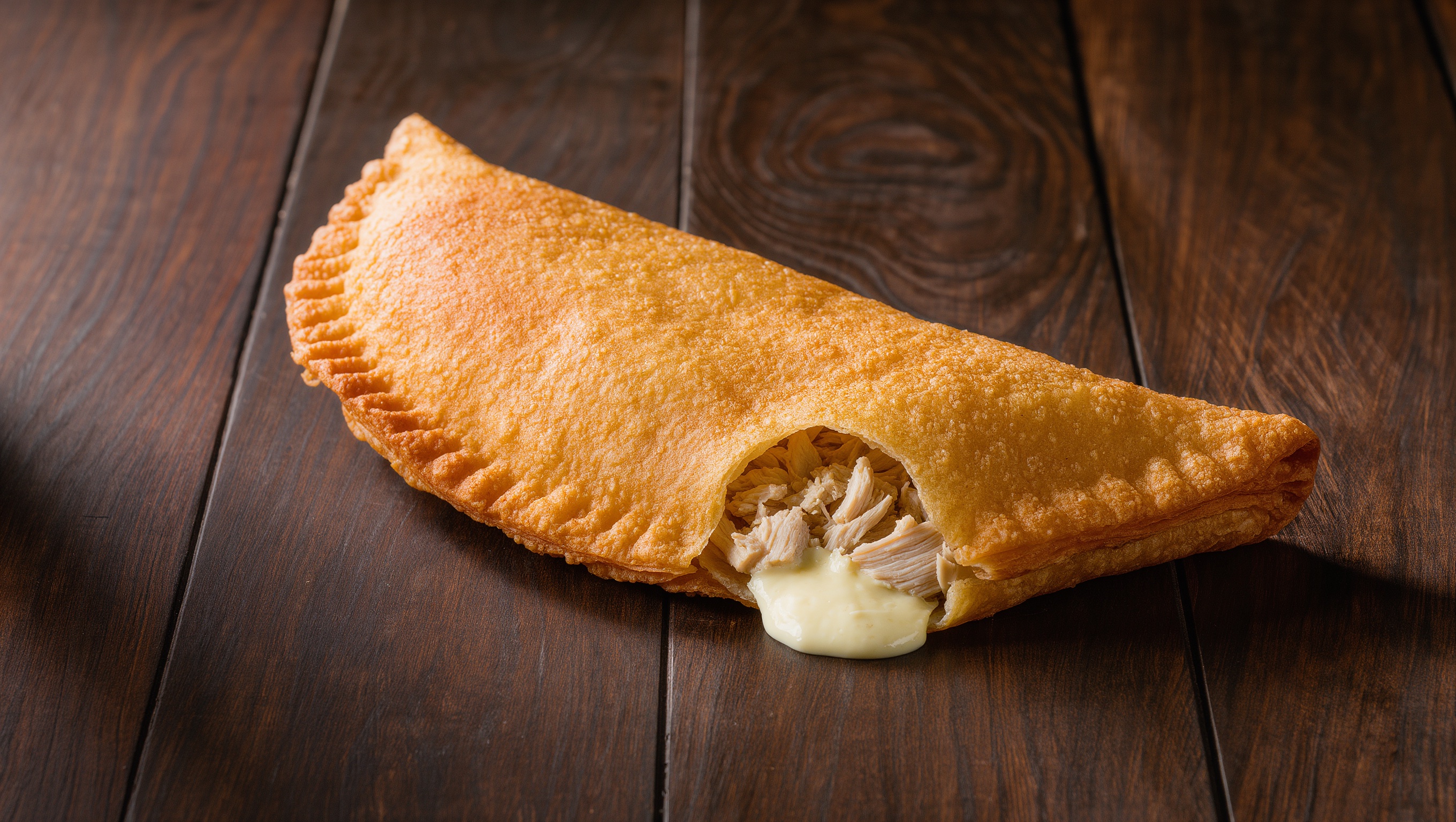
Pastel de frango is a Brazilian fried pastry of paper-thin wheat dough folded around a seasoned shredded chicken filling, often with the creamy cheese catupiry, and deep-fried until blistered and crisp. It is a defining street food of Brazil's open-air markets and pastelarias, eaten hot with sugarcane juice or a cold drink.
By the chickenpie.net test kitchen · Published 23 July 2026
Where it comes from
The pastel's origins are usually traced to Asian immigrant communities in São Paulo in the first half of the twentieth century. Common accounts credit Japanese immigrants, and some say Chinese cooks, with adapting fried wrapped pastries such as spring rolls to Brazilian tastes and selling them at markets; the details differ between tellings and are not firmly documented.
Whatever the precise origin, the pastel became thoroughly Brazilian. The feira, the weekly street market, made pastel and caldo de cana, sugarcane juice, an iconic pairing, and dedicated shops called pastelarias spread through Brazilian cities. Fillings multiplied: ground beef and cheese are the classics, with chicken, hearts of palm, shrimp, and pizza-style versions all standard. São Paulo remains the heartland of pastel culture, though every sizable Brazilian city has its market stalls and pastelarias.
The chicken version, frequently enriched with catupiry cheese as frango com catupiry, mirrors one of Brazil's favorite flavor pairings, also seen in the baked empada and the teardrop-shaped coxinha. Baked cousins exist, notably pastel de forno and the small pot-pie-like empadinha, but the fried market pastel is the reference.
How it is traditionally made
The dough is a smooth wheat paste, often made with a splash of cachaça or vinegar, which is said to encourage the bubbles that blister the surface in hot oil. It is rolled or machine-sheeted very thin, closer to a wonton wrapper than to pie crust, then cut into large rectangles or half-moons.
The chicken filling is cooked before frying: shredded poached chicken folded with sautéed onion, garlic, and tomato, seasoned simply, and often bound with catupiry or another creamy cheese so it stays moist inside the shell. The filling is spread thinly, the dough folded over, and the edges pressed and crimped tight, since any gap bursts in the fryer.
Pastéis are deep-fried to order in hot oil for a couple of minutes until puffed, blistered, and golden, then eaten immediately with hot sauce on the side. Freshness is the point: a pastel is at its best within minutes of leaving the oil. Sizes vary from snack rectangles to plate-sized versions sold as a light meal.
What surprises a British or American cook
A cook expecting chicken pie will find something closer to a giant crisp dumpling: wafer-thin fried dough, a thin layer of creamy shredded chicken rather than a deep saucy filling, and a lifespan measured in minutes. It is market food eaten standing up, and the cheese-enriched filling replaces gravy entirely.