The chicken adobo empanada of the Philippines
Philippines · Empanadang adobong manok
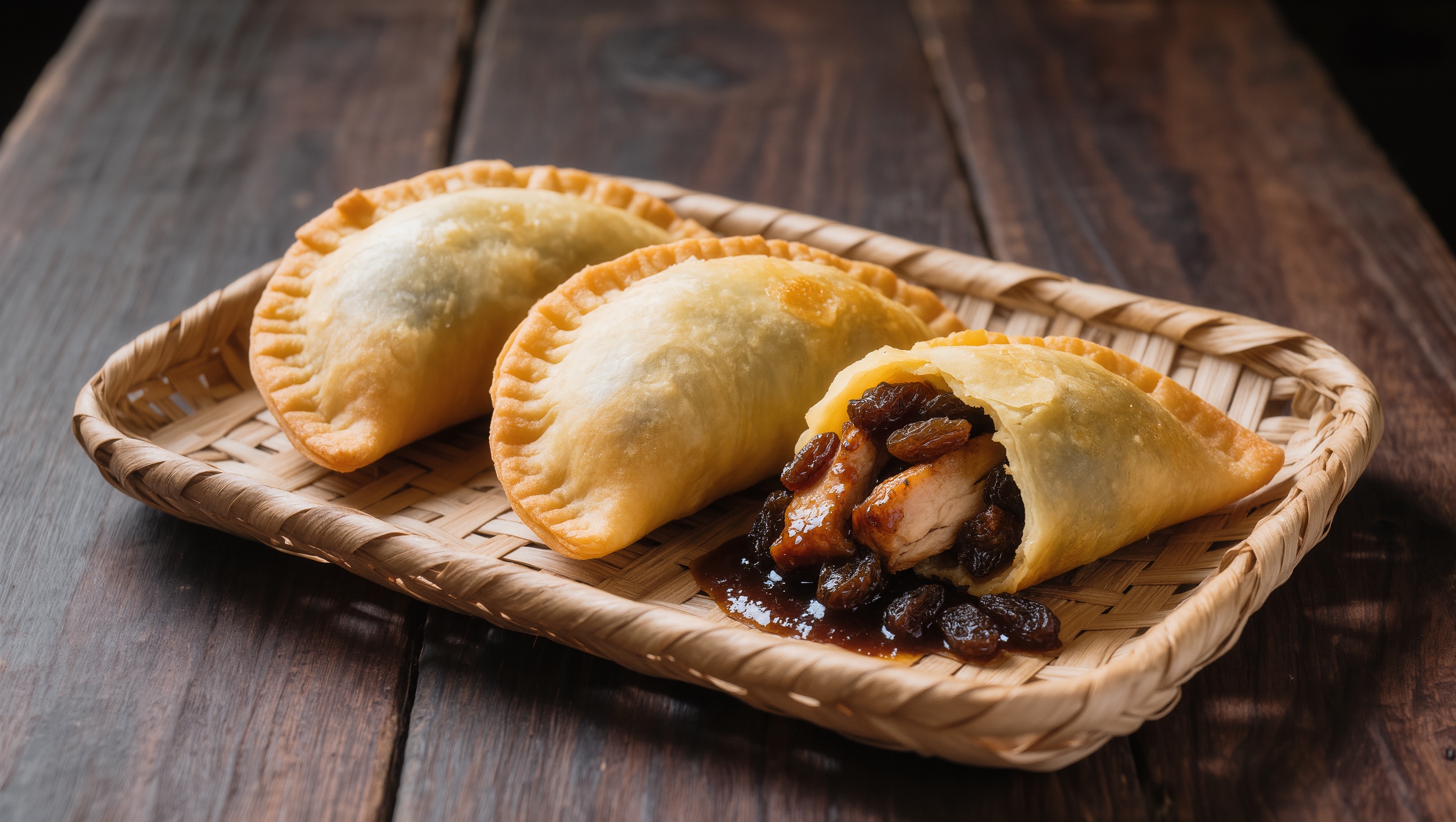
A chicken adobo empanada is a Filipino turnover filled with chicken cooked adobo style, braised in vinegar, soy sauce, garlic, and bay leaf, then shredded and sealed in pastry that is baked or fried. It is a modern pairing of two established Filipino traditions: the Spanish-introduced empanada and the national braise, adobo.
By the chickenpie.net test kitchen · Published 13 August 2026
Where it comes from
Both parents of this dish have long Filipino histories. The empanada arrived through more than three centuries of Spanish colonial rule and developed strong regional forms, most famously the bright orange, deep-fried Ilocos empanada. Adobo, cooking meat in vinegar and salt or soy, is generally considered an indigenous preservation technique that predates colonization and later absorbed the Spanish name.
Putting adobo inside an empanada, however, is best described as a modern fusion rather than an old regional specialty. It appears in contemporary Filipino cookbooks, food blogs, bakeshops, and diaspora pop-ups rather than in older provincial traditions, and no particular origin story is established. The logic is straightforward: adobo is the default Filipino flavor of chicken, and the empanada is the default Filipino hand pie, so cooks combined them.
The format has proved popular with Filipino-American bakers in particular, for whom it packages a homeland flavor in a portable, giftable form. It sits alongside other modern Filipino empanada fillings such as sisig and longganisa. Recipes now circulate widely online, and versions appear at food fairs and Filipino restaurants overseas.
How it is traditionally made
The filling starts as a true adobo: chicken simmered in vinegar, soy sauce, plenty of garlic, black peppercorns, and bay leaves until tender, then shredded and cooked down further so the braising liquid reduces to a thick, clingy glaze. A dry, intensely flavored filling is the goal, since a brothy adobo would leak. Some cooks add potato, onion, or a little sugar for a sweeter Manila-style profile.
The pastry varies with the maker. Bakeshop versions often use a soft, slightly sweet baked dough or a flaky butter pastry, while street-style versions may use a thin wrapper and go into the fryer. Rounds are filled, folded into half-moons, and crimped, then baked to golden or fried until crisp.
They are eaten warm out of hand, as merienda, the Filipino mid-afternoon snack, or packed for travel. A side of spiced vinegar for dipping is common with fried versions. Because adobo keeps well, the filling can be made a day ahead, which suits both home cooks and small bakeshops.
What surprises a British or American cook
The flavor base is the surprise: instead of cream, stock, and herbs, the chicken carries vinegar tang, soy salinity, and heavy garlic, reduced to a glaze rather than a gravy. The format is an individual sealed turnover, often slightly sweet in its pastry, and it is a snack food, not a plated dinner pie.