Bastilla: Morocco's sweet and savory pie
Morocco · Bastilla / pastilla (بسطيلة)
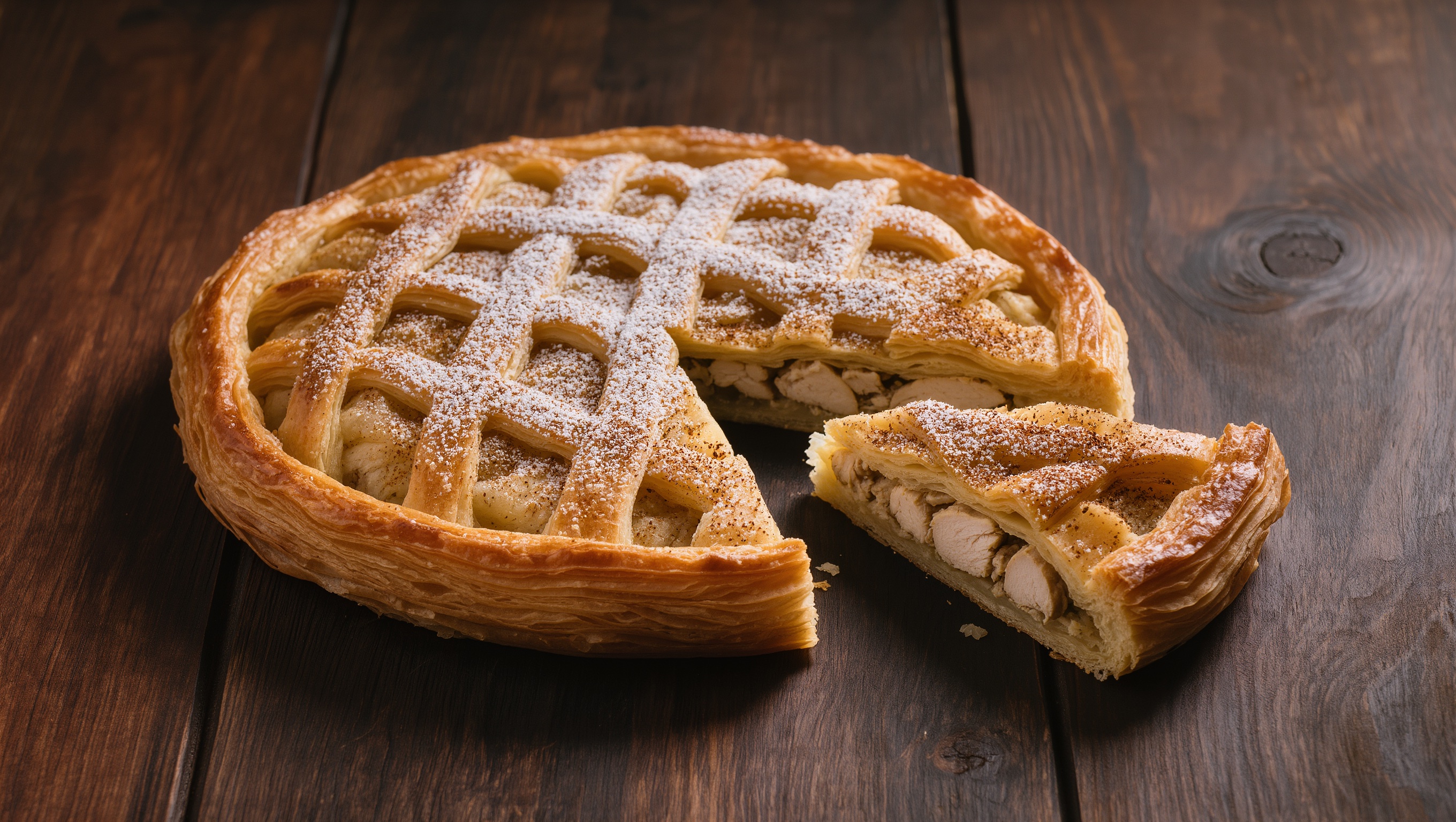
Bastilla, also spelled pastilla, is a Moroccan festive pie of shredded poultry, a lemony egg and onion mixture, and sweetened toasted almonds, wrapped in paper-thin warqa pastry and finished with powdered sugar and cinnamon. Traditionally made with pigeon, it is now most often made with chicken and served at weddings and celebrations.
By the chickenpie.net test kitchen · Published 8 July 2026
Where it comes from
Bastilla is widely linked to the cooking of al-Andalus, the Muslim territories of medieval Spain, and its name is generally thought to derive from a Spanish word for pastry or small pie. Many accounts hold that the dish, or its ancestor, traveled to North Africa with Muslims and Jews leaving the Iberian Peninsula, though the details of this transmission are debated among food historians and firm documentation is thin.
Within Morocco, bastilla is especially associated with Fez, a city with a long reputation for refined cooking, and it became a benchmark of skilled home and professional kitchens. The original bird was pigeon or squab; chicken became the common substitute in the twentieth century as squab grew expensive and scarce for everyday celebration cooking.
Bastilla remains a dish of occasion. It is commonly served as the opening course of a wedding feast or an honored-guest meal, and a seafood version has become popular in recent decades, especially along the coast. Versions of the dish are also found in Algeria, where a related pie is part of the cuisine of Tlemcen.
How it is traditionally made
The pastry is warqa, a nearly transparent sheet made by dabbing a soft dough onto a hot flat pan, thinner and slightly sturdier than filo. Making warqa by hand is a specialized skill, and many households traditionally bought it from specialist makers, as they still do; filo is a common substitute abroad.
The filling is cooked in stages. The bird is braised with onion, saffron, ginger, cinnamon, and herbs until tender, then boned and shredded. The braising liquid is reduced and thickened with beaten eggs to make a soft, savory curd. Separately, almonds are fried or toasted, then ground with sugar and cinnamon. The three elements, meat, egg mixture, and sweet almonds, are layered inside overlapping sheets of warqa in a round pan, wrapped into a flat cake, and brushed with butter.
The pie is baked or pan-fried until crisp and golden, then inverted and dusted with powdered sugar and lines of ground cinnamon. It is cut into wedges and eaten hot, traditionally with the fingers at a shared table.
What surprises a British or American cook
The sweet and savory register is the biggest surprise for a British or American cook: sugar and cinnamon sit directly on a meat pie, and the filling includes sweetened almonds. The pastry is shatteringly thin rather than thick and flaky, there is no gravy, and the pie is a flat wrapped cake served as a first course at celebrations, not a homely main.