What wine goes with chicken pie?
A dry white with some body is the safest match for chicken pie: unoaked or lightly oaked Chardonnay, Chenin Blanc or a white Burgundy. Creamy fillings suit richer whites, while a light red such as Pinot Noir works with bacon or mushroom fillings. Dry cider is an excellent non-wine alternative.
By the chickenpie.net test kitchen · Published 8 July 2026
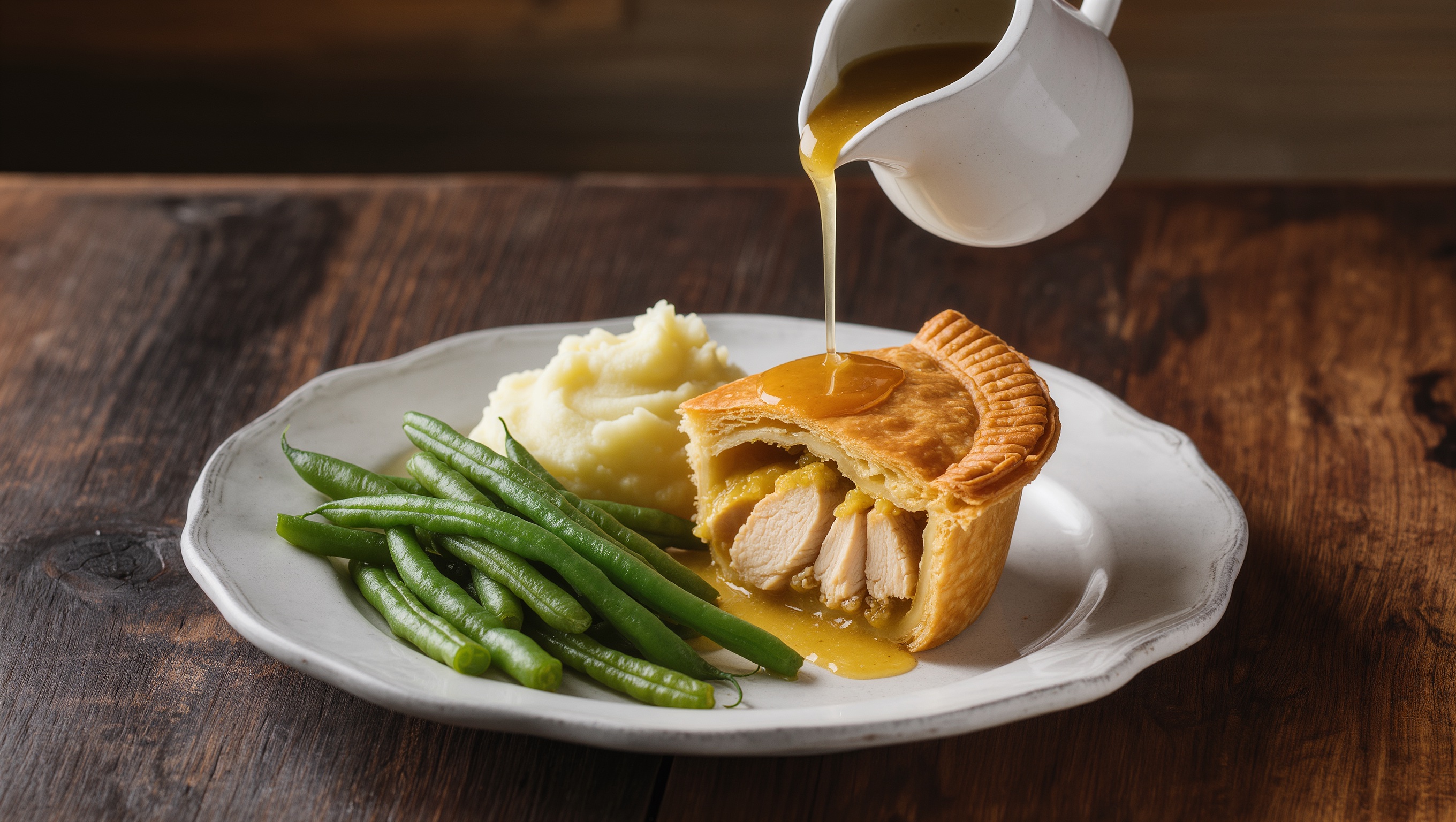
Why white usually wins
Chicken pie is rich but not heavy on tannin-friendly flavours, so most reds overpower it. What the dish needs is acidity to cut the buttery pastry and cream, plus enough weight to stand up to the filling.
That points to Chardonnay in its rounder styles, Chenin Blanc from South Africa or the Loire, and dry white Burgundy such as Macon. A good dry Riesling also works, especially with a curried filling where its touch of fruit flatters the spice.
Pairings by filling
The filling matters more than the pastry. Use the dominant flavour to steer the choice.
| Filling | Wine | Style notes |
|---|---|---|
| Creamy leek or tarragon | Lightly oaked Chardonnay | Cream on cream, with acidity to refresh |
| Chicken, bacon and cider | Dry Chenin Blanc or dry cider | Apple notes echo the cider in the pot |
| Chicken and mushroom | Pinot Noir or aged white Rioja | Earthy flavours suit a savoury red |
| Curried chicken | Off-dry Riesling | A little sweetness tames the heat |
| Plain chicken and vegetable | Cotes du Rhone blanc | Weight without heavy oak |
If you prefer red, or no wine at all
Stick to light, low-tannin reds served slightly cool: Pinot Noir, Beaujolais or a light Grenache. Anything bigger, such as Cabernet or Shiraz, will flatten the chicken and make the cream taste thin.
Beyond wine, dry cider is arguably the best match of all for a chicken pie, particularly one made with cider in the filling. A golden ale or a chicken-friendly bitter also works well, and sparkling water with lemon does the acidity job at zero cost.
Serving temperature does more work than the label. Whites want 8 to 10C, light reds 14 to 16C, and both taste flat straight off a warm kitchen counter. For a long lunch, open one bottle per three guests and the arithmetic usually lands about right.