How to season a pie filling properly
Season in layers as you cook, then taste the finished, cooled filling and adjust it to be slightly more assertive than you would serve as a stew, because pastry mutes seasoning. Salt for depth, an acid such as lemon or mustard for lift, and one dominant herb are the reliable framework for a chicken pie.
By the chickenpie.net test kitchen · Published 27 August 2026
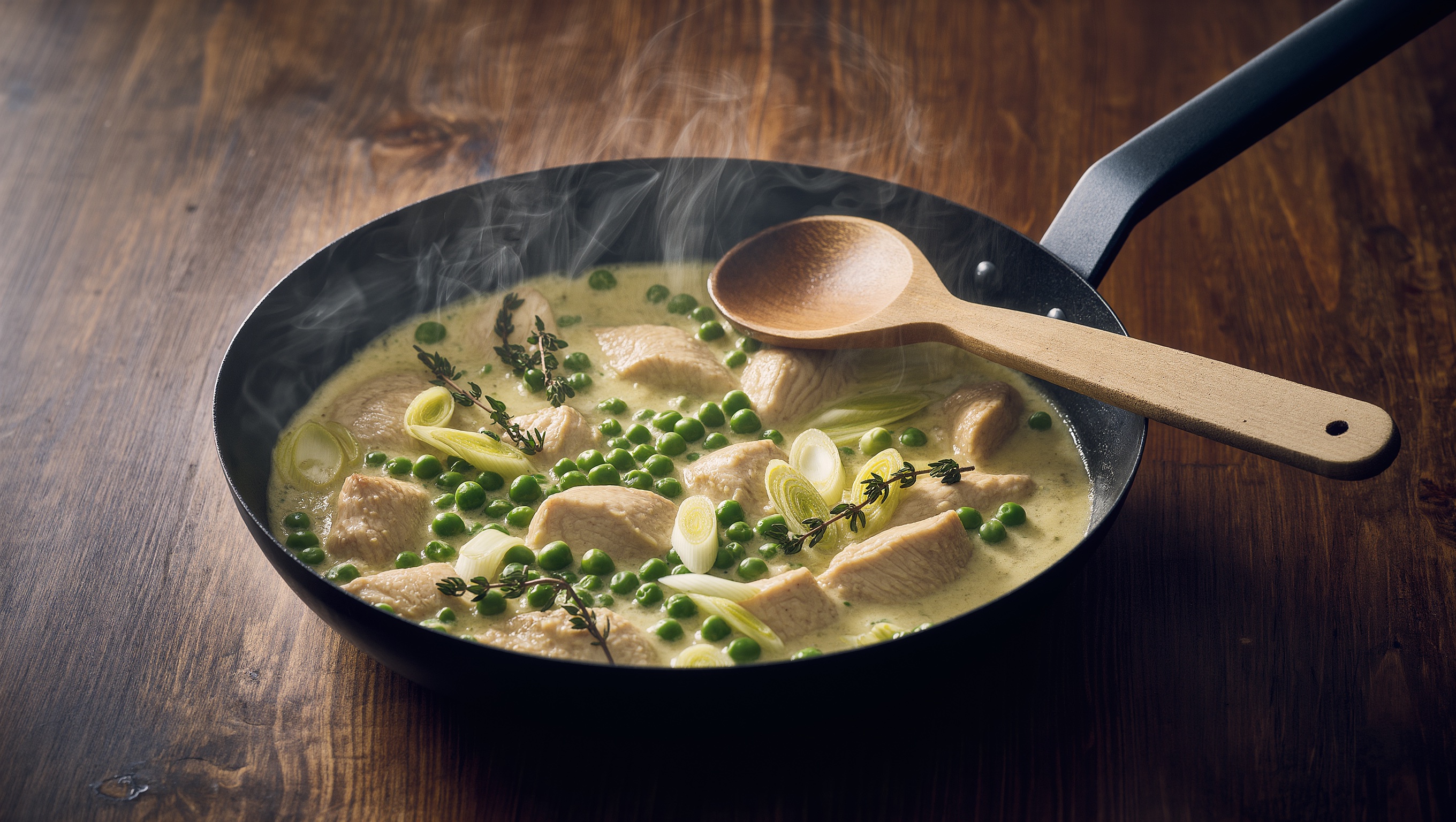
Pastry is a flavour muffler
A filling that tastes perfectly balanced from the pan will taste flat from the pie. The pastry contributes richness but no seasoning, every forkful dilutes the filling with plain crust, and serving temperature drops perception of salt further still. The professional habit is to season the filling until it is just a shade too assertive on its own, trusting the pastry to bring it back into line.
The second habit is layering. Salt added only at the end sits on the surface of the sauce; salt added at each stage, to the browning chicken, the sweating vegetables, and the sauce, penetrates and builds depth that a final correction cannot fake.
Step by step
Treat this as a seasoning schedule that runs alongside whatever recipe you are cooking.
- Salt the chicken just before browning or add a good pinch to the poaching liquid.
- Season the vegetables lightly as they sweat, with salt and freshly ground pepper.
- Taste the stock before it goes into the sauce. If it is already well salted, hold back later.
- Build the sauce, then season it with salt and white pepper until it tastes fully rounded on its own.
- Add your aromatics: one lead herb such as thyme or tarragon, and supporting notes like bay or a little nutmeg.
- Finish with acid: a squeeze of lemon, a teaspoon of Dijon mustard, or a splash of cider vinegar. Acid is what makes a rich filling taste bright instead of heavy.
- Cool the filling completely, then taste it again cold and nudge the salt and acid up if it has gone quiet.
Diagnosing a dull pie
If a finished pie tastes flat, the missing element is almost never herbs. It is salt first, acid second. Herbs added to compensate just make an under-seasoned filling taste like an under-seasoned filling with herbs in it.
Watch the salty ingredients too. Bacon, stock cubes, and cheese all carry their own load, so when they feature, salt the other stages with a lighter hand and let the final tasting settle the balance.