How to rest pastry and why it matters
Rest pastry wrapped in the fridge for at least 30 minutes after mixing, and again for 15 to 20 minutes after rolling and shaping, before it goes in the oven. Resting lets the gluten relax so the pastry does not shrink, lets the flour hydrate evenly, and firms the butter so the crust bakes crisp instead of greasy.
By the chickenpie.net test kitchen · Published 31 August 2026
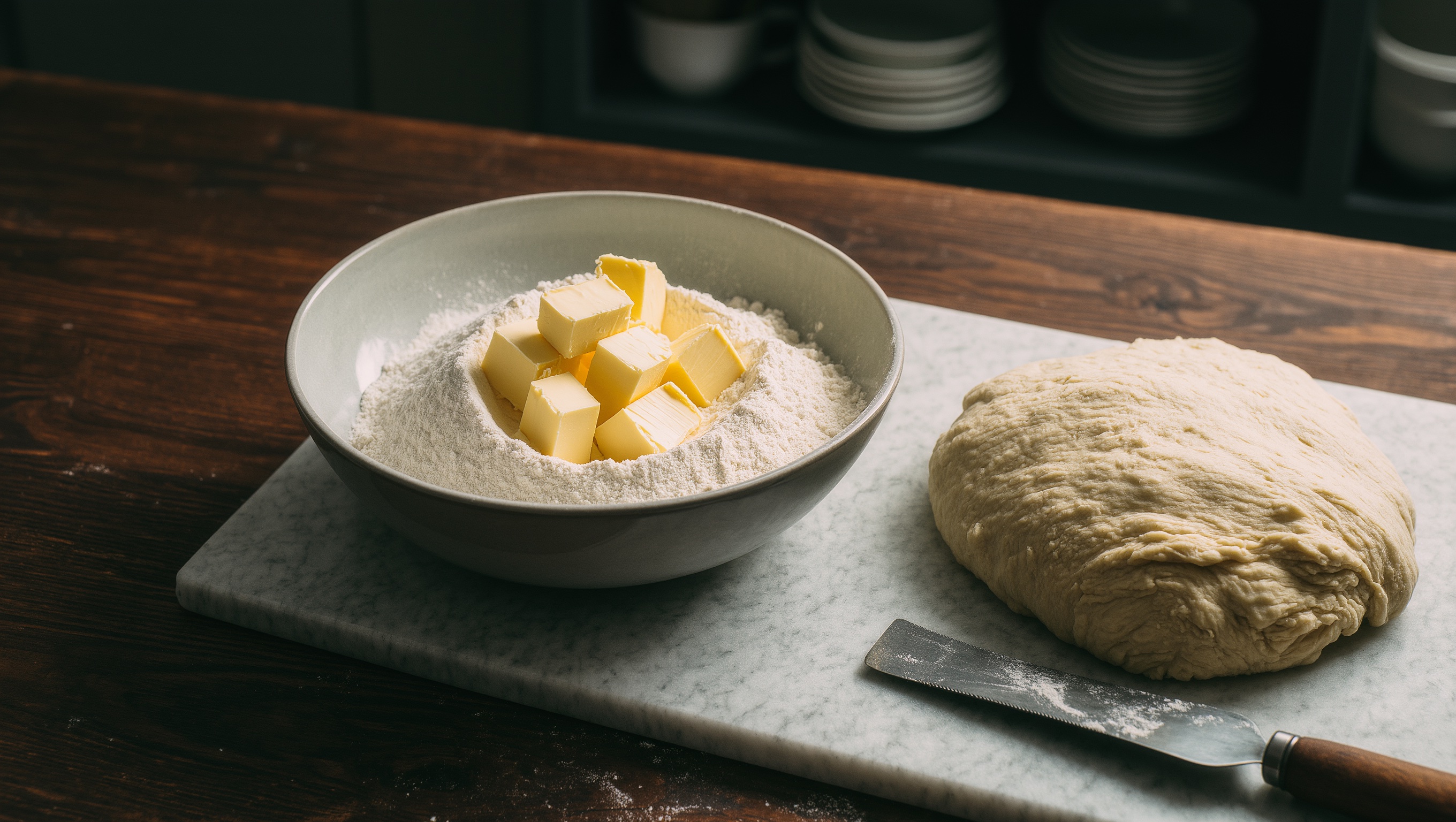
Three things happen in the fridge
Resting looks like doing nothing, but three useful processes run while the dough sits. First, the gluten strands stretched by mixing and rolling gradually slacken, which is why rested pastry holds its shape and unrested pastry shrinks back and slumps. Second, water migrates from wet patches into dry ones, so the dough rolls evenly instead of cracking at the edges. Third, the butter re-chills, and cold butter is the difference between flaky pastry and pastry that leaks fat across the baking sheet.
Thirty minutes is the working minimum after mixing. An hour is better, and overnight is better still for shortcrust, which rolls beautifully the next day after ten minutes on the worktop to lose its chill.
When to rest, and for how long
Pastry benefits from two rests, and skipping the second is the more common mistake.
| Stage | Minimum rest | What it prevents |
|---|---|---|
| After mixing the dough | 30 minutes in the fridge | Cracking during rolling, uneven hydration, tough crumb |
| After lining the dish or shaping the pie | 15 to 20 minutes in the fridge | Shrinking walls, slumped crimping, fat leaking on contact with heat |
| Between folds of rough puff | 30 minutes per pair of folds | Butter smearing into the dough and killing the layers |
| Overnight, wrapped well | Up to 2 days | Nothing: this is a scheduling luxury that improves texture |
The test for an unrested dough
You can feel the difference. Pull gently at the edge of a rolled sheet: rested pastry stays where you leave it, while unrested pastry visibly creeps back like a rubber band. If it creeps, it is telling you what it will do in the oven, on your pie, where you cannot fix it.
One exception to all this: hot water crust is worked warm and rests only briefly, because its structure comes from set fat rather than relaxed gluten. Every other pie pastry in this guide obeys the fridge.