How to make all-butter shortcrust by hand
Rub 125g cold cubed butter into 250g plain flour with a pinch of salt until the mixture looks like coarse breadcrumbs, then bind with about 5 tablespoons of ice-cold water and rest the dough in the fridge for at least 30 minutes. Cold ingredients, minimal handling, and a proper rest are what separate crisp pastry from tough pastry.
By the chickenpie.net test kitchen · Published 8 July 2026
The 2:1 rule
Shortcrust runs on a simple ratio: roughly two parts flour to one part fat by weight. For a double-crust chicken pie, 350g plain flour to 175g butter gives you enough for a base and a lid with a little spare for patching. Water is the variable, and the safest starting point is 1 tablespoon of ice-cold water for every 50g of flour, added gradually.
Butter melts at a lower temperature than lard or shortening, which is why all-butter pastry demands cold hands and a cool head. The reward is flavour that neither of the alternatives can match, plus a crisp, slightly flaky bite when the butter stays in discrete pieces rather than smearing into the flour.
Step by step
Work quickly and stop each stage earlier than instinct suggests. Overworked shortcrust develops gluten, and gluten means shrinkage and toughness.
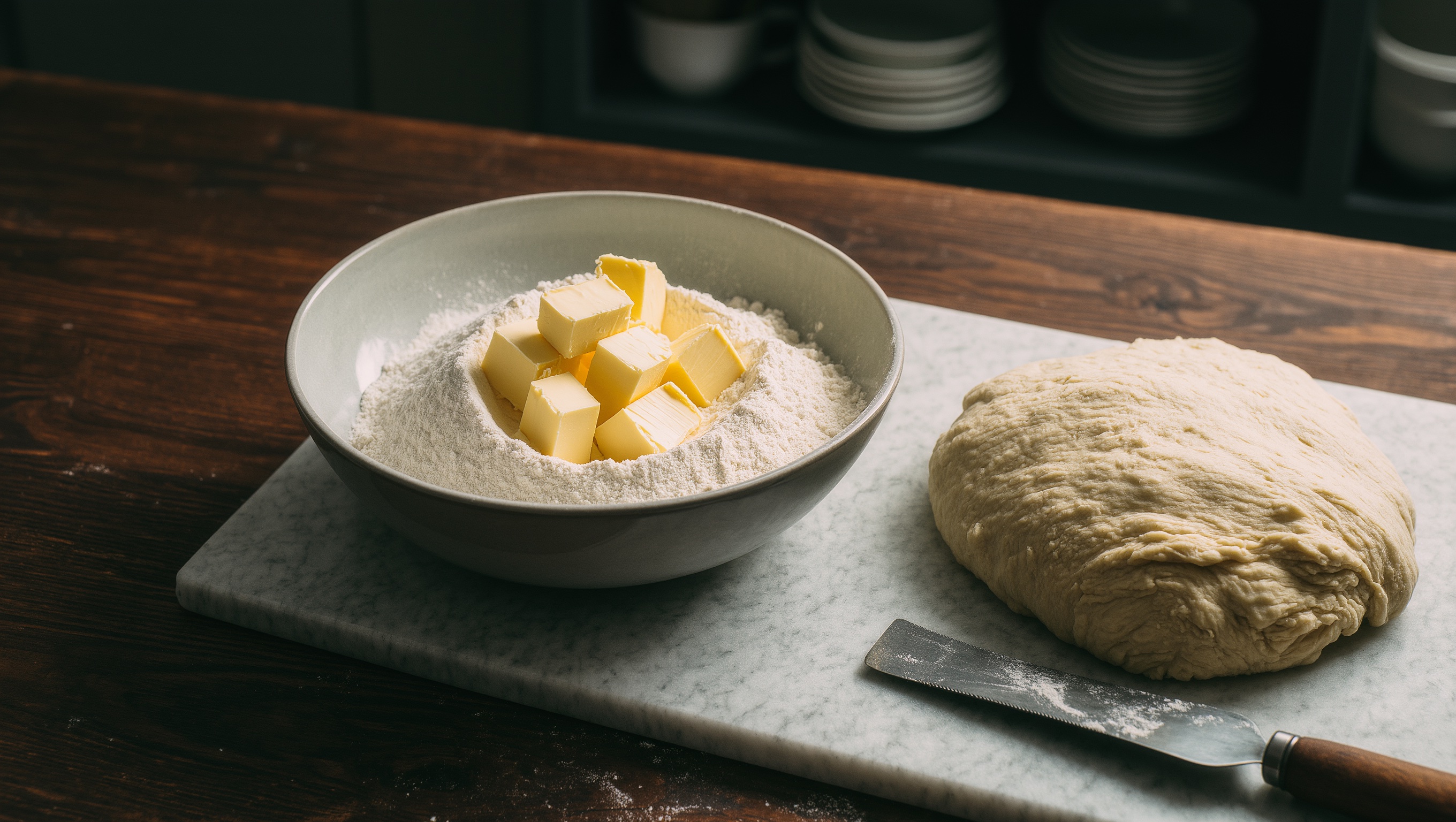
- Chill 125g butter, cut it into 1cm cubes, and put it back in the fridge while you weigh 250g plain flour into a wide bowl with half a teaspoon of fine salt.
- Tip the butter into the flour and toss the cubes so each is coated.
- Using just your fingertips, lift small amounts and rub the butter into the flour, letting the mixture fall back into the bowl. Fingertips stay cooler than palms.
- Stop when the mixture resembles coarse breadcrumbs with a few pea-sized flecks of butter still visible.
- Sprinkle over 4 tablespoons of ice-cold water and cut it through with a table knife, adding the fifth tablespoon only if dry patches remain.
- Press the dough together into a rough disc without kneading. It should just hold when squeezed.
- Wrap and rest in the fridge for at least 30 minutes before rolling.
Signs you have gone wrong
A greasy, shiny dough means the butter melted, usually from warm hands or a warm kitchen. Chill everything and work in shorter bursts next time. A cracked, crumbly dough that will not roll means too little water: flick a little more over the crumbs and press again rather than kneading.
If the baked pastry turns out tough and shrinks away from the dish, the culprit is almost always overworking or skipping the rest. The fix costs nothing: handle it less, and give the gluten 30 minutes in the fridge to relax before it meets the rolling pin.