How thick should pie pastry be rolled?
Roll shortcrust to about 3mm, roughly the thickness of a pound coin, and puff pastry a little thicker at 4 to 5mm so the layers have room to rise. Bases can go slightly thicker than lids, up to 4mm, because they carry the filling. Ready-rolled sheets come at about 3mm.
By the chickenpie.net test kitchen · Published 27 August 2026
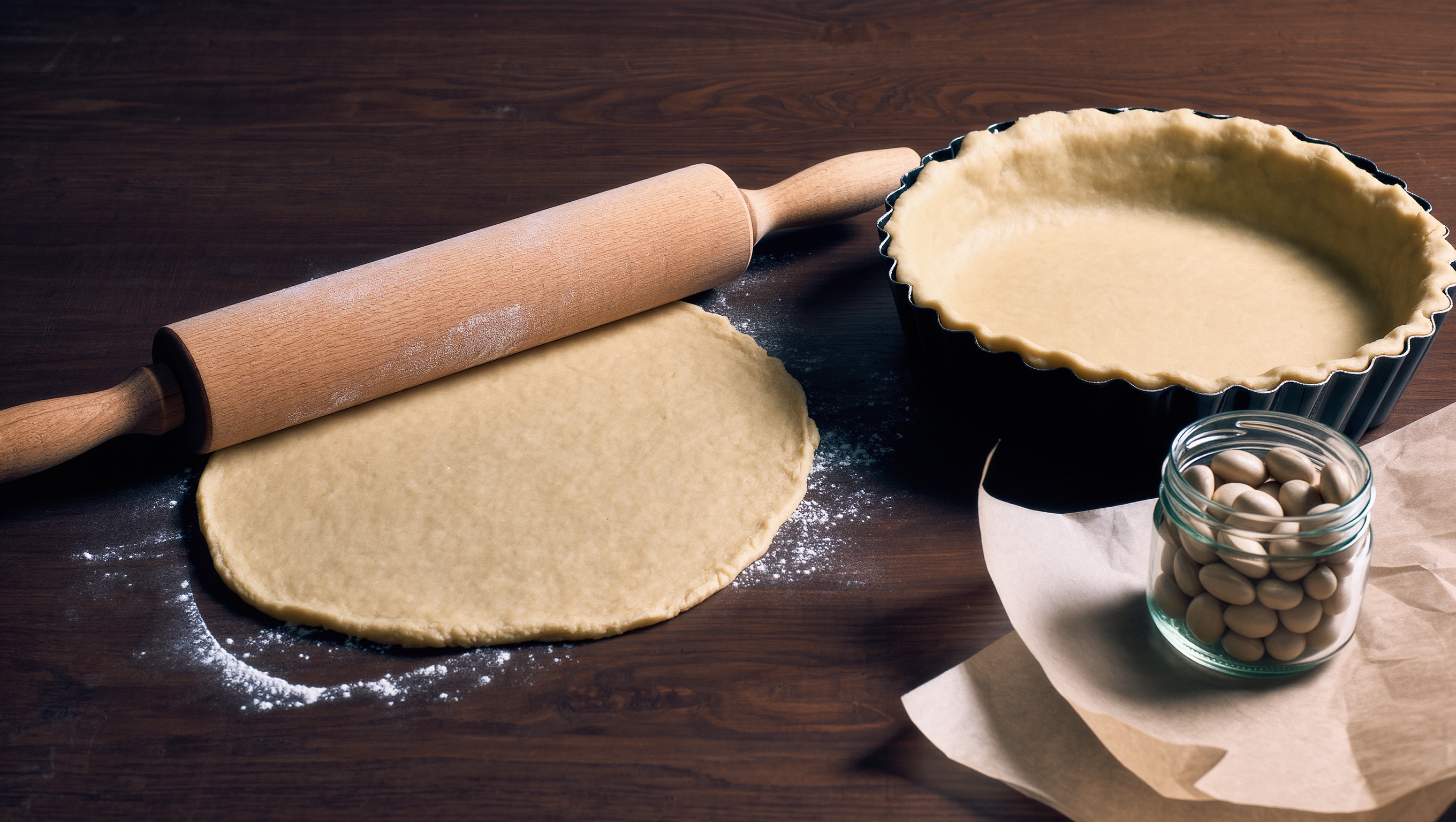
The numbers, and how to hit them
Home bakers almost always roll too thick, which gives a stodgy crust and an underbaked middle layer. Three millimetres feels alarmingly thin the first time, but it bakes crisp and lets the filling lead.
Judge it against a coin, or take the guesswork out entirely with rolling guides: a pair of 3mm wooden strips either side of the dough, or a rolling pin with thickness rings. Even two stacked pieces of cardboard work.
| Pastry and position | Thickness | Note |
|---|---|---|
| Shortcrust lid | 3mm | Crisp, cooks through reliably |
| Shortcrust base | 3 to 4mm | A little extra strength under a wet filling |
| Puff or rough puff lid | 4 to 5mm | Thinner puff has too few layers left to rise |
| Hand pies and turnovers | 3 to 4mm | Must hold together in the hand |
| Hot water crust | 5 to 6mm | Structural walls for a raised pie |
Why thickness matters so much
Too thick and the inner layer of pastry steams instead of baking, leaving a raw seam where crust meets filling, the classic complaint about disappointing pies. Too thin and a base tears on lining or leaks in the oven, and a lid collapses into the filling.
Uniformity beats precision. A sheet that swings between 2mm and 5mm will bake patchily whatever the average, so roll from the centre outwards, rotating the pastry a quarter turn between strokes, and fix thick spots before they reach the dish.
Practical rolling notes
Roll on a lightly floured surface with a chilled, rested dough, and sweep excess flour off before the pastry meets the dish, since raw flour bakes into a dusty skin.
If the pastry resists and springs back as you roll, it is telling you the gluten is tense. Stop, cover it, and give it 10 minutes before continuing. Forcing it now buys shrinkage later.