How to make pastry in a food processor
Pulse cold cubed butter into flour in short bursts until it looks like coarse breadcrumbs, then pulse in ice-cold water just until the mixture starts to clump. The machine does the rubbing in seconds without warming the fat, but it will also overwork the dough in seconds, so the skill is knowing when to stop.
By the chickenpie.net test kitchen · Published 15 July 2026
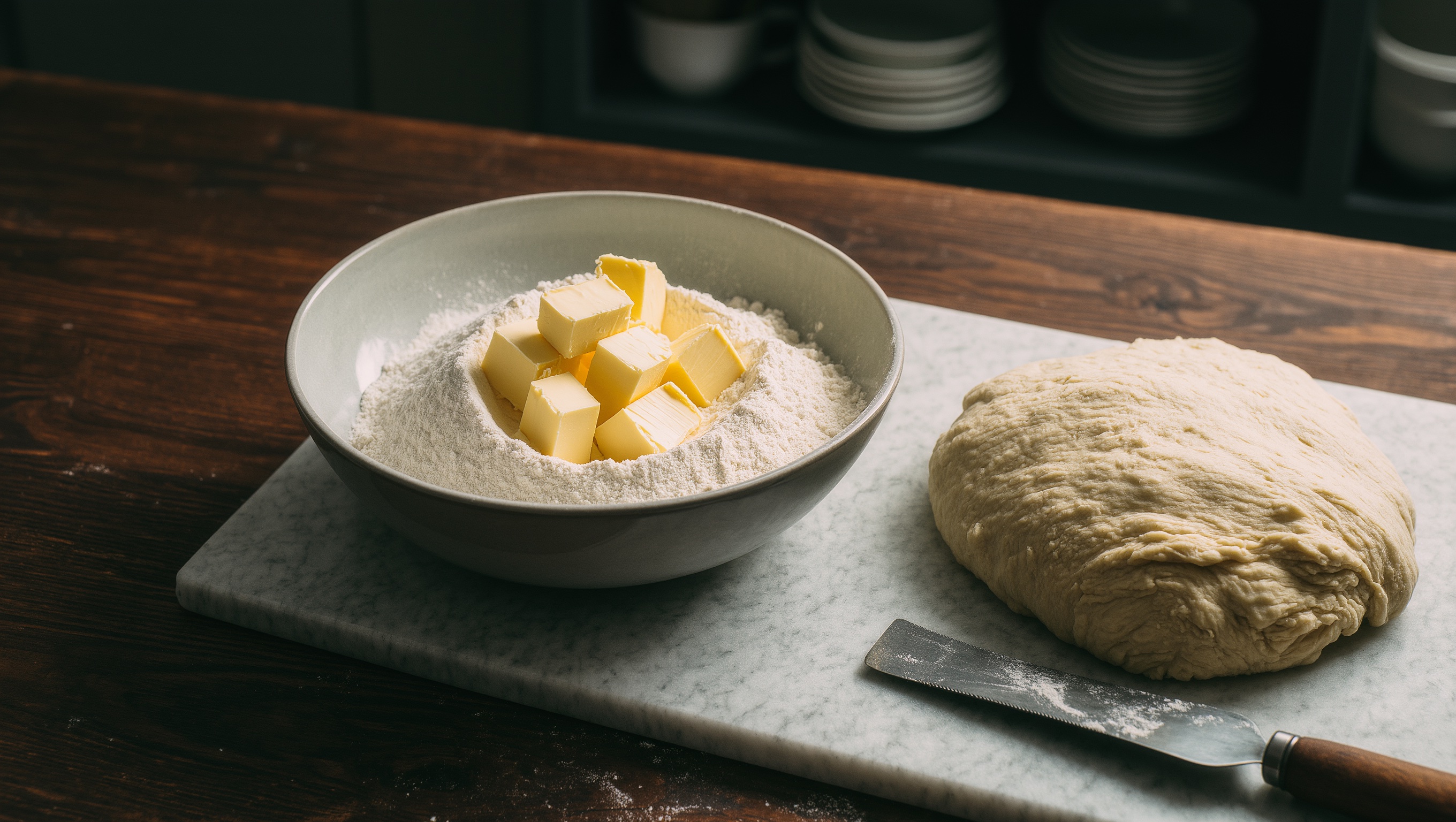
Faster and colder, with one catch
A food processor makes better pastry than warm hands ever will, because metal blades do not radiate body heat. The rubbing-in stage that takes five minutes by hand takes fifteen seconds by machine, and the butter stays colder throughout. The catch is that the same speed applies to ruining it: two seconds too many past the clumping point and you have a kneaded, toughened dough.
The ratio does not change. Use two parts flour to one part cold butter by weight, a pinch of salt, and about 1 tablespoon of ice-cold water per 50g of flour, held back slightly because machines need marginally less water than hands.
Step by step
Use the pulse button only. A running motor gives you no control over where the dough stops.
- Chill the processor bowl and blade in the freezer for 10 minutes if the kitchen is warm.
- Add 250g plain flour, half a teaspoon of salt, and 125g cold butter in 2cm cubes.
- Pulse in one-second bursts, about 8 to 10 of them, until the mixture resembles coarse breadcrumbs with a few larger flecks.
- Sprinkle 4 tablespoons of ice-cold water over the surface so it distributes evenly.
- Pulse 3 or 4 more times, stopping the instant the mixture starts forming clumps that catch on the blade. It should not form a ball.
- Test by squeezing a handful: if it holds together, it is done. If it crumbles, add 1 more tablespoon of water and pulse twice.
- Tip onto the worktop, press gently into a disc, wrap, and rest in the fridge for at least 30 minutes.
The ball is a warning sign
Recipes that tell you to process until the dough forms a ball are steering you into toughness. By the time a ball rides around the bowl, the gluten is well developed and the butter is smeared. Stop at clumps and finish by hand with two or three presses.
For flakier results, hold back a quarter of the butter cubes and pulse them in for only the last two or three bursts, leaving visible pieces that bake into short, crisp layers. If you would rather start by hand, a shortcrust recipe written for a hot kitchen shows the rubbing-in method alongside the same chilling rules.